The World Economic Forum (WEF) has published an article highlighting the Poverty Stoplight as a key tool for understanding the multidimensional challenges faced by farming families across Africa and for designing more effective solutions to strengthen food systems.
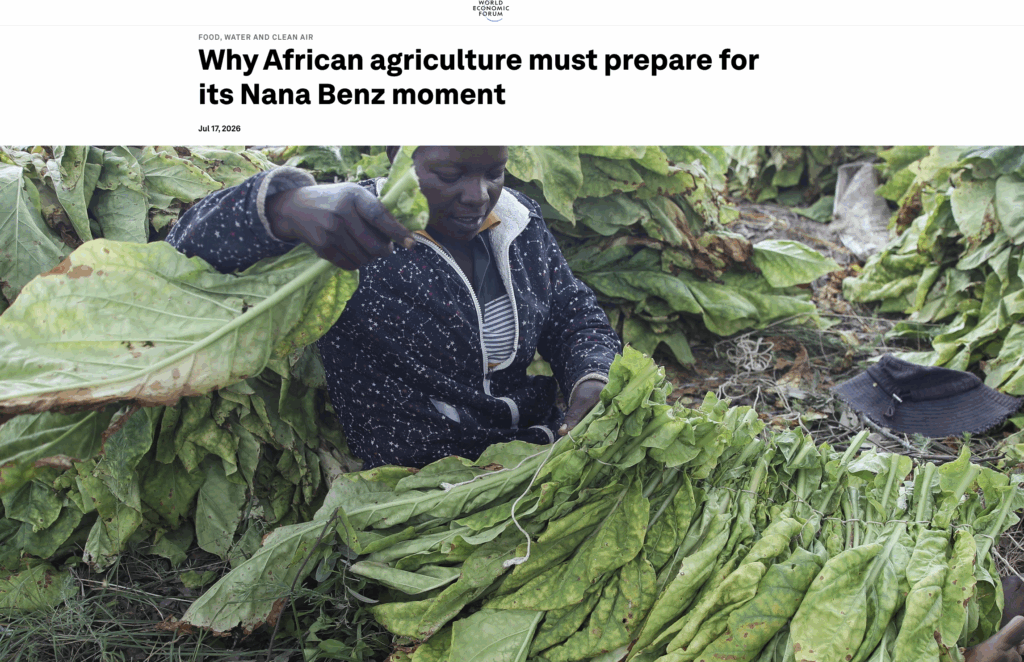
The article, titled «Why African Agriculture Must Prepare for Its Nana Benz Moment,» was co-authored by Julia Corvalán, Global Operations Manager of the Poverty Stoplight, and Carl Manlan, Head of Partnerships and Business Development at the Alliance for a Green Revolution in Africa (AGRA).
The publication examines the succession crisis facing African agriculture, as increasing numbers of young people leave rural areas in search of better economic opportunities. To better understand this reality, the authors analyzed data collected through the Poverty Stoplight methodology, which was applied to 59 smallholder farming families in Sierra Leone.
The findings revealed that 78% of the indicators assessed fell within the categories of poverty or extreme poverty, simultaneously affecting dimensions such as income, education, housing, health, community participation, and motivation. The study also found that 90% of the families had no savings, nearly 95% struggled to access nutritious food, and 59% identified income diversification as an urgent priority.
According to the authors, these findings demonstrate that poverty cannot be addressed from a single perspective. Instead, it requires an understanding of the multiple dimensions that shape families’ decisions and opportunities. In this case, the methodology helped explain why many young people do not view agriculture as a viable career path, even when their families depend on it for their livelihoods.
The article argues that strengthening the resilience of food systems requires investing not only in infrastructure, seeds, and technology, but also in people by creating real opportunities that make agriculture economically viable, socially valued, and attractive to future generations.
Publication on one of the world’s most influential platforms for global analysis represents another significant recognition of the international impact of the Poverty Stoplight, developed by Fundación Paraguaya and currently implemented in more than 60 countries. Governments, nonprofit organizations, businesses, and international institutions use the methodology to empower families to identify their own priorities, develop personalized action plans, and build their own path toward a better quality of life.